

Ubiquiti wireless access point mounting kit
$49.99
Sign in for your price
Mfg # FLEXHD-CM-3
CDW # 6125861

Know your gear
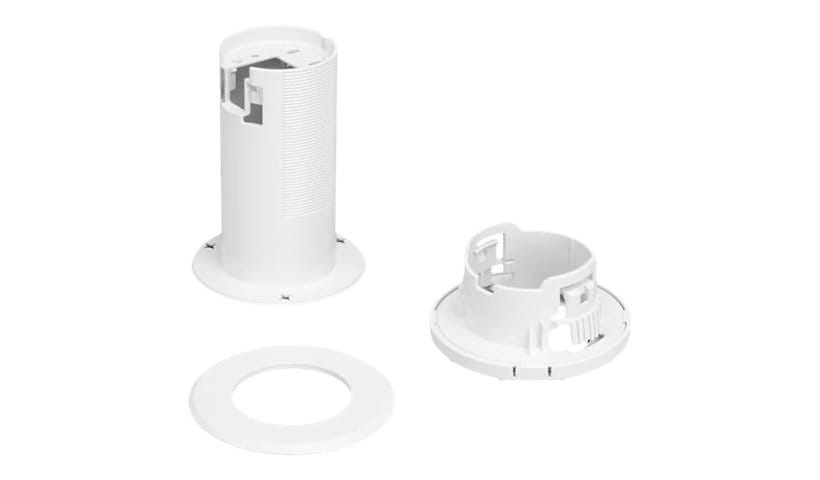
Recessed ceiling mount accessory for select UniFi access points. Mount the AP to a drop ceiling tile, drywall ceiling or solid ceiling for discreet, low-profile appearance. Sliding retainer with locking threads and a snap-in mechanism for the AP make mounting simple. Magnetic face place hides the bracket for a stylish finish.
Add to Compare
Enhance your purchase
Ubiquiti wireless access point mounting kit is rated
4.20 out of
5 by
15.
Rated 5 out of
5 by
reviewer1392807 from
Simple management, good connectivity between access points, and pretty scalable
What is our primary use case?
We primarily use the solution for wireless office or home networks.
What is most valuable?
In general, I like the solution very much. The solution has simple management. It's easy to use.
The ability to walk between access points without losing the network is very useful.
Wireless options are pretty easy to buy in Ukraine.
Their hardware is very good.
The company is always innovating on the product. They are continuously working to make it better.
What needs improvement?
In Ukraine at least, it's a problem when it comes to buying the hardware. For example, I made a request for 20 switches a few months ago. The solution needs to have worldwide availability.
I want to get more experienced with switching hardware, however, I need more documentation in order to understand it.
I don't know why they don't sell it like hardware for data centers. For example, I have a Juniper switch which costs $3,000. There's a similar Juniper switch-like item with the same characteristics and it costs $7,700. Marketing shows that it's only for offices and other stuff. For home, for office, but not for the data center. I don't know why.
For how long have I used the solution?
I've been using the solution for three or four years.
What do I think about the stability of the solution?
The solution is very stable. It's reliable. There aren't bugs or glitches. It doesn't freeze or anything like that. It's good.
What do I think about the scalability of the solution?
The scalability is quite good. If a company needs to expand out the solution they can do so easily.
We have a little less than 50 users on the solution.
We do plan to continue to use the product and may increase usage in the future.
How are customer service and technical support?
We've found that their online resources are excellent. We've found every answer we needed online, therefore, we've never had to call them up directly.
Which solution did I use previously and why did I switch?
We did use another solution before this product. It was cheap. However, it was a long time ago, and I can't recall the name of the solution. We switched due to the fact that we were looking to simplify the host management. This solution offered very simple management. That's why we're looking to switch from Juniper to Ubiquiti in our data center. We spend less time managing our hardware.
However, at this point, we aren't able to buy the hardware we need in our country.
How was the initial setup?
The initial setup is not complex. The implementation was very straightforward and simple.
In terms of deployment, a wireless setup takes about 15 minutes or so. It's pretty fast.
In terms of maintenance, you only need one admin person to handle it.
What about the implementation team?
I handled the implementation myself. I didn't need the assistance of any integrators or consultants.
What other advice do I have?
We're pretty big users. We have a 1,000 server center.
We're using the latest version of the solution.
We use a hardware deployment with UDM pro or Cloud Key.
I would recommend the solution to other organizations.
Overall, I'd rate the solution nine out of ten, simply due to a few problems we have obtaining the hardware.
Which deployment model are you using for this solution?
On-premises
Disclaimer: I am a real user, and this review is based on my own experience and opinions.
Date published: 2020-10-29T00:00:00-04:00
Rated 5 out of
5 by
Jessy Liao from
A scalable and simple product to manage office networks
What is our primary use case?
In my company, we use Ubiquiti Wireless since it is a very simple product that is very useful for the IT team in our company who manages our office network.
What is most valuable?
The most valuable feature of the solution is that it is a simple and useful tool that offers good performance.
What needs improvement?
The documentation and support provided by the solution areas of concern where improvements are required. If some error occurs in the solution, it is not easy to find a person to help you with the troubleshooting process, and moreover, the product doesn't have an online community website to help users.
For how long have I used the solution?
I have been using Ubiquiti Wireless for a year. I am a customer of the product.
What do I think about the stability of the solution?
It is a stable solution. Stability-wise, I rate the solution a nine out of ten.
What do I think about the scalability of the solution?
Scalability-wise, I rate the solution a ten out of ten.
In our company, twelve people use the product.
My company probably has plans to increase the usage of the product.
Which solution did I use previously and why did I switch?
I have experience with Meraki.
How was the initial setup?
The product's initial setup phase was easy.
The solution is deployed with the help of a router, switch, and Wi-Fi.
The solution can be deployed in an hour.
There is a professional person to handle this step-by-step process of setting up the device.
One person, who is the main engineer in our company, is required to take care of the deployment and maintenance processes of the product.
What's my experience with pricing, setup cost, and licensing?
Ubiquiti Wireless is a cheaply priced product.
What other advice do I have?
Ubiquiti Wireless requires a user to undergo a very easy setup phase, and it is a cheap product.
I rate the overall tool a ten out of ten.
Disclaimer: I am a real user, and this review is based on my own experience and opinions.
Date published: 2023-11-17T00:00:00-05:00
Rated 5 out of
5 by
reviewer1028196 from
Cost-effective, scales well, reliable, but they have security flaws
What is our primary use case?
We use this solution as wifi wireless points and controllers.
What is most valuable?
I like the simplicity, the ease of use.
What needs improvement?
Occasionally the upgraded firmware causes errors. When they update the interface some features disappear.
There are some outstanding security flaws.
We had a security incident that forced us to re-evaluate our security posture, when we did, we were corporate mandated to stop using it.
For how long have I used the solution?
I have been working with Ubiquiti Wireless for eight years.
What do I think about the stability of the solution?
The stability is very good.
What do I think about the scalability of the solution?
Ubiquiti Wireless scales very well.
What's my experience with pricing, setup cost, and licensing?
It's a cost-effective solution.
What other advice do I have?
This solution is better suited for small to medium-sized businesses.
I would rate Ubiquiti Wireless a seven out of ten.
Disclaimer: I am a real user, and this review is based on my own experience and opinions.
Date published: 2021-12-04T00:00:00-05:00
Rated 5 out of
5 by
Puji Rachmanto from
Installation is easy and the coverage is good, but we have issues with performance and support
What is our primary use case?
Ubiquiti is deployed in the five-floor building that houses the integrated laboratory for my vocational school. This access point provides internet to every lab on campus, including the computer laboratory.
For how long have I used the solution?
I've been using Ubiquiti since 2015 or so.
What do I think about the stability of the solution?
One of the Ubiquiti access points broke down, and it can't be used. It's still down now, so overall Ubiquiti hasn't been a good experience for me.
How are customer service and support?
We're extremely disappointed with Ubiquiti support. We need more local support.
How would you rate customer service and support?
Negative
How was the initial setup?
Installing Ubiquiti is easy.
What other advice do I have?
I rate Ubiquiti Wireless five out of 10. I wouldn't recommend it.
Which deployment model are you using for this solution?
On-premises
Disclaimer: I am a real user, and this review is based on my own experience and opinions.
Date published: 2022-02-11T00:00:00-05:00
Rated 5 out of
5 by
reviewer1785561 from
Low-cost, easy to use, and straightforward to set up
What is our primary use case?
We primarily use the solution for wireless connectivity to the internet in the office. You can roam around and stay connected easily.
What is most valuable?
It's a good option for SMEs.
The stability and performance are great.
It's very easy to use.
The initial setup is fairly straightforward.
The costs to use the product are very low.
What needs improvement?
This might not be the best solution for a very large organization.
They can continue to improve their offering so that they could be used in the future in large enterprises also. It only uses the local connection and it performs to a lesser extent due to this. It's hard to check on things remotely. For example, if I have a branch office somewhere in another city or even another country and someone tells me that something is wrong with the wi-fi or firewall, if I have a good wi-fi solution (for example Cisco or FortiNet), I can simply connect to an access point there. With Ubiquiti, I cannot do that.
There seem to be no access points in Ubiquiti that allow us to use a double link. There is no link redundancy. If a link fails, I lose an access point.
For how long have I used the solution?
I've used the solution for a few years.
What do I think about the stability of the solution?
The solution is stable and the performance is good. There are no bugs or glitches. It doesn't crash or freeze.
What do I think about the scalability of the solution?
This is a good solution for small and medium-sized enterprises and not more than that. It might not scale to the needs of very large companies.
We have up to 100 users at this time.
We will likely increase usage in the future.
How are customer service and support?
I've never had any issues with the product and therefore have never contacted support. I can't speak to how helpful or responsive they would be.
Which solution did I use previously and why did I switch?
At a previous job, I did work with Cisco. It's hard to compare the two. Cisco is simply on a different level.
How was the initial setup?
While it can cause some problems in installation if you use a software controller, it's actually pretty easy. If you are familiar with the network protocols it is straightforward.
There's only one person that handles deployment and maintenance tasks. That's me. It's pretty low-maintenance.
What about the implementation team?
I can handle the initial setup myself.
What's my experience with pricing, setup cost, and licensing?
The solution is relatively cheap. I personally don't pay for the licensing and therefore can't speak to exact pricing.
What other advice do I have?
We are working with the latest version of the solution right now.
If a company is looking for a low-cost option, I would recommend this product.
I'd rate the solution at an eight out of ten. We've been pleased with its general capabilities overall.
Which deployment model are you using for this solution?
On-premises
Disclaimer: I am a real user, and this review is based on my own experience and opinions.
Date published: 2022-02-22T00:00:00-05:00
Rated 5 out of
5 by
reviewer2535993 from
Provides an ease of management and valuable built-in security options
How has it helped my organization?
The platform has been extremely beneficial for our organization. It is easy to set up, and we use a Dream Router, which includes power over Ethernet. This allows all access points to be powered and managed centrally. We also have a guest network alongside our corporate network for visitors, and its remote management capability has been particularly useful.
What is most valuable?
The solution's most valuable features include ease of use and management and the built-in security options in the Dream Router. From a central location, I can monitor traffic, block sites if necessary, and manage access points efficiently. Additionally, remote management via their cloud portal is a great advantage.
What needs improvement?
One area of improvement could be the inclusion of conditional forwarding in the Dream Router. This feature would allow me to route certain domains through specific paths, which would be a helpful addition.
For how long have I used the solution?
I have been working with Ubiquiti Wireless for about 18 months.
What do I think about the stability of the solution?
The product is extremely stable. I rate the stability a ten out of ten.
What do I think about the scalability of the solution?
We have about 20 endpoints using Ubiquiti Wireless in our company. It is being used extensively, and we plan to increase its usage at another site.
I rate the scalability an eight.
How are customer service and support?
They have good documentation and community support online.
How would you rate customer service and support?
Positive
Which solution did I use previously and why did I switch?
I used Sophos before switching to Ubiquiti Wireless. I decided to switch because the Sophos kit was expensive and had reached end-of-life, meaning it no longer supported older versions of its hardware.
How was the initial setup?
The initial setup is easy. It took me about a week to deploy, although it could have been done in less time. The deployment involved connecting the system to the Internet, setting up the access points, creating the networks, and adopting the wireless access points into the network for management.
I rate the process a ten.
Which other solutions did I evaluate?
I have used various solutions, including Avaya and TP-Link. Still, I found Ubiquiti Wireless to be the most suitable for my needs due to its cost-effectiveness and robust management options.
What other advice do I have?
Overall, I rate Ubiquiti Wireless a ten.
Disclaimer: I am a real user, and this review is based on my own experience and opinions.customer
Date published: 2024-09-25T00:00:00-04:00
Rated 5 out of
5 by
Andreas Diehl from
User-friendly with seamless roaming for enhanced usability
What is our primary use case?
We are using Ubiquiti Wireless in a small environment. I am also involved in selling and using Ubiquiti products. We have been using products such as the Pro, AC Pro as an access point, and UDM Pro Plus for over ten years.
What is most valuable?
The seamless roaming feature was significant at the beginning, making it easier to grow into the system. The whole provisioning, configuration, and adapting process is user-friendly and considered an industry-standard in our environment. The centralized configuration with a graphical interface was a unique feature when we started, and it remains beneficial. It allows for easy deployment and expansion.
What needs improvement?
The firmware updates can sometimes be too quick and have flaws, especially for early access users. The availability of products has improved but could still be better, as there were delays in the past. There are limited wireless camera options in the Ubiquiti range, which is an area they could expand.
For how long have I used the solution?
We have been using Ubiquiti Wireless for over ten years.
What do I think about the stability of the solution?
The product has been very reliable. We never experienced an outage with Ubiquiti, even in our small environments with around sixty clients and eight access points.
What do I think about the scalability of the solution?
For standard networks and small environments, Ubiquiti offers flexible scalability. It is easy to grow by adding new devices.
Which solution did I use previously and why did I switch?
Before Ubiquiti Wireless, we used products from Netgear, Aruba, and Ruckus. We switched because Ubiquiti provided a centralized configuration with a graphical interface, which was attractive and practical for our needs.
How was the initial setup?
The initial setup was quite straightforward. The configuration interface is user-friendly and doesn't require top specialists.
What's my experience with pricing, setup cost, and licensing?
We initially spent around 10,000 euros on this solution and have been running it for several years. An access point costs approximately 160 to 180 euros.
Which other solutions did I evaluate?
We evaluated products from Netgear, Aruba, Ruckus, and Mikrotik. Ubiquiti's combination of features and price was more suited to our needs.
What other advice do I have?
I would rate Ubiquiti Wireless nine out of ten over the last ten years. I am very happy with the product.
Which deployment model are you using for this solution?
On-premises
Disclaimer: I am a real user, and this review is based on my own experience and opinions.
Date published: 2024-11-18T00:00:00-05:00
Rated 5 out of
5 by
Jambunathan_MS from
Has a valuable real-time reporting feature, but the interface could be more intuitive
What is our primary use case?
We primarily use the product for our financial management and CRM needs. It’s integrated into our ERP system, which supports our sales, marketing, and customer service operations.
How has it helped my organization?
The solution significantly streamlined our financial processes and improved customer relationship management. We’ve seen better financial reporting and greater efficiency in handling customer interactions.
What is most valuable?
The platform's real-time reporting and dashboard features have been valuable. They provide us with immediate insights into our financial performance and customer interactions, which helps us make informed decisions quickly.
What needs improvement?
The product's user interface could be more intuitive, and sometimes, the system can be slow during peak usage times. We’d also like to see better integration with other tools we use.
Enhanced integration capabilities and improved user experience features would be beneficial. More customizable reporting options would also be a great addition.
For how long have I used the solution?
We’ve been using Ubiquiti Wireless for about three years now.
What do I think about the stability of the solution?
The solution is generally stable, though we’ve experienced occasional slowdowns during high-demand periods.
What do I think about the scalability of the solution?
The solution is scalable and has effectively handled our growing needs. We’ve been able to add new users and modules without significant issues.
How are customer service and support?
Customer service and support have been responsive and helpful. However, there have been occasional delays in resolving issues.
How would you rate customer service and support?
Neutral
Which solution did I use previously and why did I switch?
We previously used a different ERP solution. We switched because the new solution offered better scalability and more advanced features that met our growing needs.
How was the initial setup?
The setup was relatively complex due to the customization needed to fit our specific requirements. It required careful planning and execution.
What about the implementation team?
We implemented the product with the help of a vendor team.
Which other solutions did I evaluate?
We evaluated several options, including SAP and Microsoft Dynamics. We chose this solution because it best suited our requirements and budget.
What other advice do I have?
It’s crucial to ensure that you have proper training and support to maximize the product benefits.
I rate it a seven out of ten.
Disclaimer: I am a real user, and this review is based on my own experience and opinions.
Date published: 2024-08-27T00:00:00-04:00
Rated 5 out of
5 by
Nadeem Nasir from
Solid system, but it has horrible support
What is our primary use case?
It is used in an office environment. We had an incorrect deployment. Office Ubiquiti access points were deployed in the warehouse, and they start to fail when you reach above 90 degrees. In the warehouse ceiling, it's well over 90 degrees, so four of them failed. Rather than just replace them, I decided to use outdoor access points inside the warehouse. They can survive extreme temperatures.
It's more my preference that I prefer Ruckus. There are only three big top names: Cisco, Aruba, and Ruckus. Cisco is only there because of brand recognition, but I've always appreciated Ruckus for Wi-Fi over any other brand because they truly sell a "set it and forget it" system. If you're the IT guy and you're a one-man operation, you look for things that can heal themselves and provide their own maintenance.
Other systems require a lot of heavy lifting. Ruckus doesn't. It costs more, but you get what you pay for. So, that's one of the reasons I would have replaced it with Ruckus down the road anyway. It was just convenient that these failures are taking place now.
What is most valuable?
Money. Ubiquiti is about money. If you don't have the budget for IT, you go with Ubiquiti because you can get a Ubiquiti access point for about a third of the price of Ruckus, maybe even less. It's a solid system, but it has horrible support. I would call it no support. I could not recommend Ubiquiti on a general scale to anybody that needs support because you're not going to get it.
What needs improvement?
The biggest downfall is support.
For how long have I used the solution?
It's been in operation for five years.
What do I think about the stability of the solution?
Stability is pretty rock solid. I mean, there are things that you do, like you don't run updates on your access points during the day. If you do a handful of things and you run your maintenance on weekends after hours, then you're fine. They're stable. They just won't run when you get above a certain temperature, and that's part of their specs. So it's not like they're hiding that these things aren't meant to go in warehouses. They know that.
But who's going to do that research? You're not going to really dig that far into it. So, I don't blame the people who didn't realize this before me. But it is what it is.
What do I think about the scalability of the solution?
It scales just fine. There's nothing wrong with the product itself. In fact, ours would still be running if they had just done the research and deployed this properly and realized that the temperatures in the warehouse are too high. It's really easy. There's nothing complicated about it.
How are customer service and support?
I would give them the lowest number. That's what they've earned, and that's what they deserve. That has nothing to do with the product itself, but they have decided they wanted to be the worst-supporting company in the history of IT. That's on them. I still love their products. I still use some of their products, but I know going in, I'm not gonna get any help.
How would you rate customer service and support?
Negative
Which solution did I use previously and why did I switch?
I'm moving from Ubiquiti to Ruckus. I'm actually doing that right now, but I'm very familiar with both.
The main difference is the technology used. Ubiquiti access points create a circular beam, and anything in that area can upload and download.
Ruckus does things differently. They have this direct connection concept, which is quite amazing in operation. Their technology is so advanced that you can deploy a Ruckus system in a highly congested network. I've deployed it in New York, San Francisco, Chicago, and other major cities because they have a direct connection. So, every endpoint that connects to a Ruckus access point has a direct connection to the AP. If you open up a Ruckus access point, you would actually see a bunch of what look like upside-down Christmas trees. Each one of those ends is where one endpoint connects directly to it.
The way it was described, it almost looks like that one connection stays connected to your computer as you're walking around. And if you have that type of technology, you can increase the throughput to the endpoints. So, Ruckus wireless configuration is just about as fast as Ethernet because the technology is that much more advanced. It's not a blanket; it's a direct connection to your device. You really see that when you're actually running it. It's very nice. You get what you pay for. That's why they cost so much.
How was the initial setup?
The initial setup is actually pretty straightforward. Where you get into complexity is if you're trying to migrate from an older system to a newer system.
But the initial setup is so easy you don't even have to have any kind of experience. You could deploy a Ubiquiti network on your own. It's very intuitive.
But if you have any problems, you're on your own. Even with that, the private support community around Ubiquiti is pretty big. You more or less will find your answers, but you'll have to look for them and work for them because you're not getting anybody on the phone.
What was our ROI?
If I hadn't had these failures with my use cases, I would still be running them, and I could guarantee at least ten years, so that's not bad. They don't have the habit of deploying firmware that's destructive. So it's not a lot of maintenance, and it's not a hard system to live with. But then again, you better know what it is before you get into it because nobody's going to help you.
What's my experience with pricing, setup cost, and licensing?
I would rate the pricing a two out of ten, with one being cheap and ten being expensive.
What other advice do I have?
The biggest downfall is support. But everything else is great. The products are quality products. There's no way around it. So, it's up there. I wouldn't put it in the top three, but I would put it in the top twenty. If ten is the best overall, I would put it at a six out of ten.
Disclaimer: I am a real user, and this review is based on my own experience and opinions.
Date published: 2024-07-17T00:00:00-04:00
Rated 5 out of
5 by
Dev-Patel from
Needs to improve on the shortcomings in the reliability area, but the setup phase is easy
What is our primary use case?
I use the solution in my company for our different clients who use Ubiquiti Wireless, considering that it is a fairly reliable tool. The tool provides a yearly subscription for a service. The product has a web interface on which you can log in, ensuring that it is always available while allowing you to see what is going on in your environment. You can control the features of the tool. You can use the tool for mapping or building features and to check various access points. With the product in place, you can look at the access points of more than 200 devices, and it can also handle more devices as it allows users to add other access points. With Ubiquiti Wireless, the actual range for the access point is fairly good. The product has features like controller migrations.
What is most valuable?
The most valuable features of the solution from a networking perspective stem from its ability to allow users to customize the various access points, and since our company is able to push in the updates in the tool, we can get better management capabilities and connectivity. Ubiquiti Wireless allows you to see the ports and the power consumed. When Ubiquiti Wireless is used in conjunction with switches, you can stay on the same web interface and manage the switches and access points by using the same credentials. Basically, the tool allows you to manage the whole network through a single web interface. You can give permissions or use SSH on devices and be able to use the command line to do various things, including updating the access points or resetting their statuses. The tool provides a web interface and command line facilities.
What needs improvement?
The product lacks to offer reliability to users. From an improvement perspective, the product needs to be made more reliable. The tool should also offer better support and warranties. The tool only provides a standard warranty, which gets very annoying. I have had experiences where the users of the tool keep receiving updates continuously, and you can have the latest firmware pushed into the solution, which may cause a problem. You can't opt to go for an RMA process or get any support on the tool because it doesn't offer any support after twelve months of purchase.
The latest stuff provided by the product is not as reliable as the older ones provided by the solution.
The product's stability is an area of concern where improvements are required.
The solution's technical support needs to be improved so that users can communicate with faster or more responsive support personnel with knowledgeable technical team members and get customer-friendly support. You can only get support for the product within the first twelve months of purchase, after which you won't get any support.
For how long have I used the solution?
I have been using Ubiquiti Wireless for eight years.
What do I think about the stability of the solution?
Stability-wise, I rate the solution a four or five out of ten.
What do I think about the scalability of the solution?
Scalability-wise, I rate the solution a nine out of ten.
Around 2,000 to 3,000 people in my company use the product.
The product is extensively used in my company. My company plans to increase the use of the product.
How are customer service and support?
I rate the technical support a four out of ten.
How would you rate customer service and support?
Neutral
Which solution did I use previously and why did I switch?
I have experience with Cisco. I started to use Ubiquiti Wireless because of its web interface.
How was the initial setup?
The product's initial setup phase is fairly straightforward, but it all depends on how much of a complex infrastructure you have. In general, the setup process is straightforward. If a user wants to have some advanced stuff during the product's setup phase, the process can get a lot complicated.
With the controller part, the product's user can manage the devices on the cloud.
The solution is deployed on an on-premises model.
The time required to take care of the product's setup phase depends on how a user wants to deal with the setup process. For a simple connection, a straightforward setup process is required. For managing the complex stuff, the setup process can get complicated.
What about the implementation team?
I took care of the product's installation phase.
What's my experience with pricing, setup cost, and licensing?
There aren't any license costs attached to the product.
Which other solutions did I evaluate?
I evaluated products from Cisco and Meraki against Ubiquiti Wireless.
What other advice do I have?
Speaking about the indoor or outdoor environments where the tool is deployed, I would say that I have deployed it across offices, hotels, warehouses, and mobile shops.
I wouldn't recommend the product to those who plan to use it.
In the past, I would have rated the product an eight out of ten. Presently, I rate the overall product a four out of ten.
Which deployment model are you using for this solution?
On-premises
Disclaimer: I am a real user, and this review is based on my own experience and opinions.
Date published: 2024-03-12T00:00:00-04:00
Rated 5 out of
5 by
Amir Sanayeayan from
Provides efficient support documentation, but the setup process could be easier
What is most valuable?
The solution has a user-friendly interface. It has many essential features, including encryption.
What needs improvement?
The solution's stability and setup process could be better. Also, there could be a LAN controller feature similar to Ruckus in Ubiquiti's next release.
For how long have I used the solution?
We have been using the solution for two years.
What do I think about the stability of the solution?
The solution is stable. Although, we encounter stability issues in crowded areas.
What do I think about the scalability of the solution?
The solution is suitable for small and medium businesses. We have 20-25 users in our organization.
How are customer service and support?
I refer to support documentation in the case of queries for the solution. It is good and helpful.
How was the initial setup?
The solution's initial setup could be more straightforward. It takes half an hour to complete tests and finish the process after installation.
What's my experience with pricing, setup cost, and licensing?
The solution's price is reasonable for a basic device.
Which other solutions did I evaluate?
Compared with the solution, Ruckus has a lot of software and tools for wireless functionality. It also has a LAN controller feature which is not available in Ubiquiti. I prefer using Ruckus or Cisco products while working for large companies.
What other advice do I have?
I rate the solution a seven out of ten.
Disclaimer: I am a real user, and this review is based on my own experience and opinions.
Date published: 2023-07-11T00:00:00-04:00
Rated 5 out of
5 by
Spencer Malmad from
Well-priced and highly reliable devices
What needs improvement?
An area for improvement is availability - I sometimes have to wait weeks for their equipment.
How are customer service and support?
The technical support is less than stellar.
What's my experience with pricing, setup cost, and licensing?
From a pricing point of view, Ubiquiti is excellent. They charge around $180 per access point, and the switches are around $1,100, including support and a limited warranty.
What other advice do I have?
The failure rate is very low on these devices - I've had them installed for five years and have only lost one out of a hundred. I'd rate this solution as nine out of ten.
Disclaimer: I am a real user, and this review is based on my own experience and opinions.
Date published: 2022-01-26T00:00:00-05:00
Rated 5 out of
5 by
reviewer1906461 from
Reliable platform with straightforward network management process
What is most valuable?
The platform provides a straightforward network management process. It is a cost-effective solution offering freeware for all the components.
What needs improvement?
The technical support services need improvement.
For how long have I used the solution?
We have been using Ubiquiti Wireless for three years.
What do I think about the stability of the solution?
It is a stable product.
What do I think about the scalability of the solution?
It is a highly scalable platform. I rate it a nine out of ten.
How are customer service and support?
The technical support services could be faster.
How would you rate customer service and support?
Neutral
Which solution did I use previously and why did I switch?
We used HP Aruba, Ruckus, and Cisco before. We decided to opt for Ubiquiti Wireless as we signed a distribution agreement with Ubiquiti. Secondly, we found their product range to be extremely well-priced while maintaining high-quality standards.
How was the initial setup?
As per the technicians' feedback, the installation is straightforward. We have a team of three engineers for the product maintenance.
What's my experience with pricing, setup cost, and licensing?
I rate the product’s pricing an eight out of ten. There are no additional expenses apart from the standard licenses.
What other advice do I have?
The most recent project involved implementing a Ubiquiti Wireless solution for a large factory. The project encompassed deploying approximately 35 access points throughout the factory premises, including the offices. It provides high reliability and performance. I rate it a nine out of ten.
Disclaimer: My company has a business relationship with this vendor other than being a customer:
Date published: 2024-03-07T00:00:00-05:00
Rated 5 out of
5 by
Pedro Moreira from
Provides a centralized hub for device management and has a simple setup process
What is most valuable?
The platform has a valuable console providing a centralized hub for device management, enabling users to log in and access devices effortlessly. The users gain visibility into the velocity of networking to each user. However, the standout feature lies in its ability to seamlessly manage multiple access points from a single interface.
What needs improvement?
The product or service could be improved by providing round-the-clock support directly from the company. A contract solution with 24/7 support would greatly benefit users, especially in critical situations requiring immediate assistance. It would enable users to address issues promptly and ensure uninterrupted network operation. It is important for small companies like ours, where we may need more expertise to troubleshoot problems independently.
For how long have I used the solution?
We have been using Ubiquiti Wireless for a year.
What do I think about the stability of the solution?
The platform is stable. I rate the stability a nine out of ten.
What do I think about the scalability of the solution?
The platform is easy to scale.
Which solution did I use previously and why did I switch?
We previously used Tableau. However, we encountered challenges integrating various access points into the same networking environment.
How was the initial setup?
The initial setup is simple. However, it depends on the number of shipments per month. In our scenario, with ten shipments per month, the setup took around four hours. This time frame includes finding all the necessary information on websites, considering our need for prior experience with this equipment. Despite this, we completed the setup within the allotted time frame of four hours.
I rate the process a nine out of ten.
What's my experience with pricing, setup cost, and licensing?
The platform offers a one-time purchase cost. It has competitive pricing.
What other advice do I have?
Ubiquiti wireless proves especially helpful in scenarios requiring mobility. Transitioning from wired to wireless connectivity facilitates flexibility for users previously tethered to Ethernet cables connected to switches.
The platform is very simple to set up and provides a lot of information in the network. It is suitable for small companies. I rate it an eight out of ten.
Which deployment model are you using for this solution?
On-premises
Disclaimer: I am a real user, and this review is based on my own experience and opinions.
Date published: 2024-03-19T00:00:00-04:00
Rated 5 out of
5 by
ESTEE Gabriel Carpio from
An easy to manage and use solution that is also reliable
What is our primary use case?
We use the tool internally and for client portfolios.
What is most valuable?
We had a client with a power plant. Different wireless devices from various brands caused problems. We fixed it using the Ubiquiti Wireless UDM controller and installed 75 access points and antennas.
The tool's most valuable feature is SD-WAN. It is easy to use and manage. In terms of reliability, we don't get many tickets or a service request after the installation. It's like installing and forgetting the device. In one railway construction project where we installed Ubiquiti three years ago, we've only received two inquiries since then. We provide remote support.
What needs improvement?
The solution has very good product lines. However, it feels like some models overlap. For example, a new model is announced after three months, and another new model is announced shortly after. So, the release cycle feels too short, and some features overlap. Overall, the products are very good and reliable.
For how long have I used the solution?
I have been using the product for five years.
What do I think about the stability of the solution?
I rate the tool's stability a nine out of ten.
What do I think about the scalability of the solution?
Combining internal users within our organization and clients in our existing managed service, we have approximately 3,000-3,500 users using Ubiquiti Wireless. I rate its scalability a nine out of ten.
How are customer service and support?
I rated technical support as an eight out of ten because we rarely need to call them. Instead, we usually email the community or local distributors for support, and they assist us. However, in terms of implementation, we don't rely on technical support.
How would you rate customer service and support?
Positive
Which solution did I use previously and why did I switch?
I used Aruba, Meraki, D-Link, and Cisco before Ubiquiti Wireless. We chose to switch from Cisco, Aruba, and Meraki to Ubiquiti Wireless mainly because most clients prefer cost-effective solutions. While brands like Aruba and Cisco are expensive. Ubiquiti is a US brand.
How was the initial setup?
Our organization handles Ubiquiti Wireless maintenance and troubleshooting internally. We also provide managed services for some clients, managing all the day-to-day transactions and monitoring their wireless networks. We have about eight wireless engineers responsible for all technical aspects, including deployment and maintenance of Ubiquiti Wireless and other technical tasks.
What's my experience with pricing, setup cost, and licensing?
The tool doesn't have any licensing costs.
What other advice do I have?
We don't solely rely on built-in firewall features for enterprise-level security. Instead, we often use another brand or third-party firewall the client prefers as the primary defense. For clients with less sensitive data transactions or those running via the cloud, we trust the firewall features of Ubiquiti's UDM Pro.
I rate the solution overall as a nine out of ten. There's always room for improvement, and we anticipate future developments and innovations.
Disclaimer: My company has a business relationship with this vendor other than being a customer:
Date published: 2024-04-15T00:00:00-04:00