
Eliminating Digital
Friction: How To Build
a Frictionless Enterprise
CDW research shows how top organizations are using
new approaches to AI, security and infrastructure
to increase productivity, create happier
customers, and unlock growth and innovation.
A famous scene in the 1999 movie Office Space features three workers taking a baseball bat to the office printer. Instead of working as expected, the printer refused to fulfill its purpose and instead offered only a cryptic error message: “PC Load Letter.” It shows the trio taking out their frustrations on the device with their feet and even their fists, as well as the bat.
The scene presents a clear picture of the frustration employees feel when they experience friction in the workplace. While technology has improved significantly in the decades since Office Space debuted, new research from CDW shows that workplace friction remains a significant issue that reduces productivity, increases costs and frustrates workers.
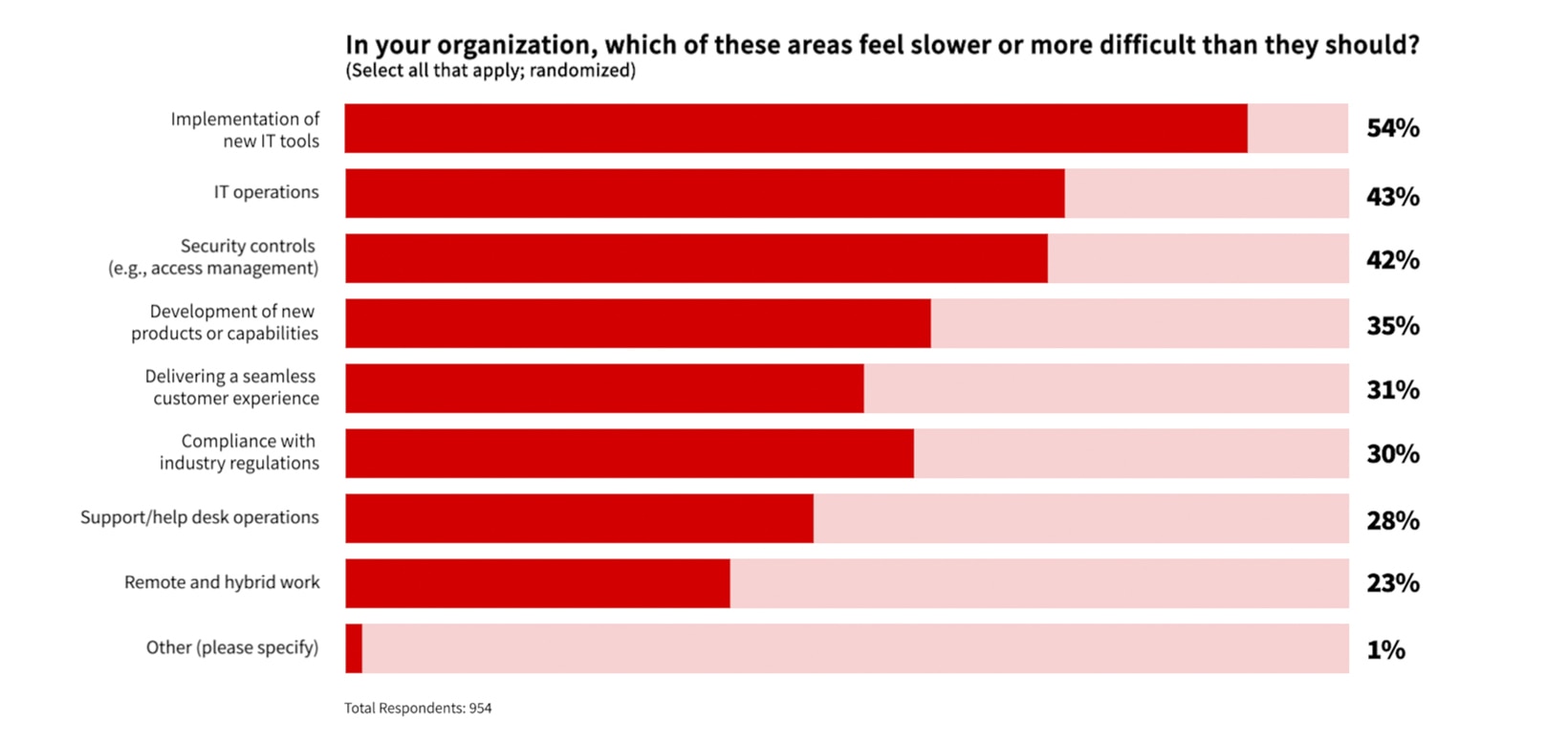
In a survey of 954 IT decision-makers (ITDMs) from across industries, CDW found that implementation of new IT tools represents a common source of friction, with 54% of respondents saying it feels slower or more difficult than it should. Further, 43% of respondents cited IT operations as a source of friction, while 42% cited access controls.
The Intention To Reduce Friction and Its Impact
Technology-based friction has existed in the workplace for decades, despite massive advances in technology. In fact, while technology has delivered powerful new capabilities, it won’t improve workflow unless organizational leaders make that a specific goal, says Conor Waddell, senior vice president for integrated technology solutions and product and partner management with CDW.
“The natural law of order bends toward complexity and friction. In any process, we tend to do things that slow us down, even with the best of intentions,” Waddell says. “There is simply no way to remove that friction without being intentional about it. It’s not going to remove itself. It has to be a leader-led effort to design and build friction out of the system.”
Improving workflows is a high priority for organizations across industries, as friction leads to a number of negative outcomes. When we asked respondents about the greatest impact of friction on their organizations, 34% said increased security risks, while 33% said it slows innovation or prevents quick decision-making.
Further, when we asked about the impact of friction created by efforts to improve cyber resilience, 56% said it reduced productivity, while 53% said it increased operational costs and 52% said it led to inefficient workflows.
“The real risk is that friction slows innovation and drives up costs, making it harder to compete,” Waddell says.
CDW can help your organization scale artificial intelligence
across the enterprise to improve how work gets done.
Workplace Evolution Brings New Tech Tools To Reduce Friction
Over time, workplace friction has evolved along with technology. For example, printers don’t represent the source of frustration now that they did a few decades ago. But users’ demands on the workplace have changed as well.
“We’re seeing processes that used to be normal changed in ways we couldn’t have even imagined a decade ago. We’re doing things in seconds that used to take days or weeks,” Waddell says. “Our expectations have changed, and the expectations of our employees and customers have changed, and so, we’re all feeling that friction way more than we have in the past.”
The Power of AI and Automation To Reduce Digital Friction
The CDW research indicates that IT decision-makers view artificial intelligence and automation as powerful tools to improve workflow. Half of respondents (50%) said their organization has made investments in AI integration and automation for low-level tasks to reduce friction in the workplace.
However, as organizations make these investments, they need to do so strategically. “There is a fundamental shift underway with AI. For the past few years, we’ve been using AI as an add-on to human-centered processes. But in many places, this relationship is slowly inverting, with AI handling the process while humans are freed up for human-to-human connection,” Waddell says. “In practice, this means doctors spending more time with patients while AI takes the notes, lawyers advising clients while AI reviews contracts and HR partners spending more time with employees while AI answers common questions.
When AI is used like this, it directly reduces friction on the end user,” Waddell adds. “But if AI is implemented poorly or not aligned with business needs, it can actually create new confusion and risks that you have to chase.”
The Human Role in Digital Friction
Organizations can’t solve friction solely with new tools; culture, alignment and adoption are equally powerful friction points. When asked to define friction, 51% of respondents described it as process inefficiencies and workflow obstacles, by far the most common response. About 15% said friction manifested in communication and collaboration breakdowns. One respondent stated: “Friction occurs when there is a lack of communication and synchronization between business units. Undefined expectations cause friction at every turn.”
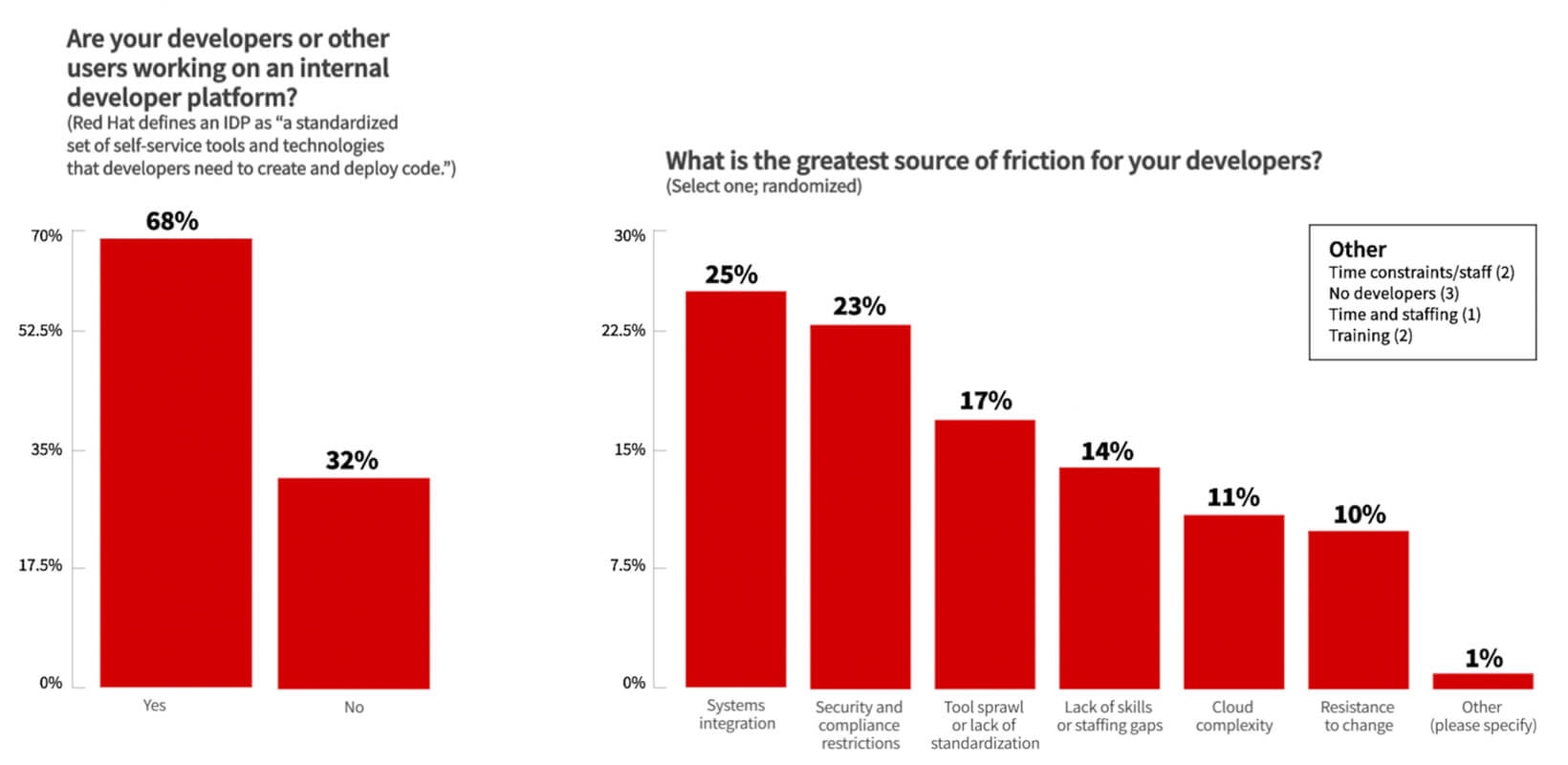
Humans are involved in workplace issues in multiple ways. When we asked ITDMs about the greatest sources of friction for their developers, lack of skills or staffing gaps (14%) and resistance to change (10%) were among the leading responses.
“The bottom line: Humans are at the center here,” Waddell says. “But the solution isn’t to blame individuals, it’s to empower them with better tools, clear expectations from leadership and a culture that prioritizes the work of designing this out of the system.”

Taking Measure: The Importance of Digital Friction Metrics
While its impacts are real, the term “friction” is a fairly abstract concept. However, it’s important for organizations to have a way to measure the friction their employees experience. More than a third of respondents (37%) said they measure friction by help desk tickets and support volume. “The number of help desk tickets is a primary factor since client problems and complaints need priority responses,” one ITDM said.
“If you can’t measure it, you can’t fix it,” Waddell says. “At CDW, we guide customers to use practical metrics — like help desk ticket volume, resolution times and user feedback — to track friction. We also encourage regular reviews of workflows and technology, so organizations can proactively address issues before they become bigger problems.”

The Role of AI in Addressing Friction
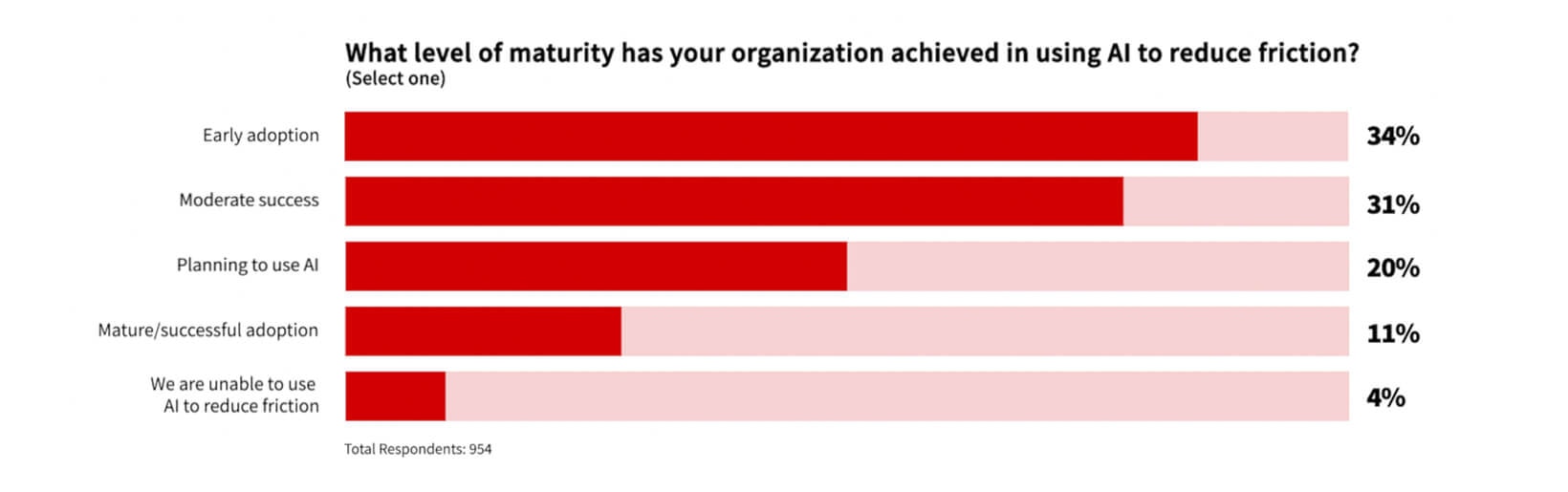
Our research made clear that AI can play a pivotal role in helping organizations improve the flow of work. About two-thirds of ITDMs (67%) said their organization is spending significantly on generative AI. But most organizations appear to be early in their journey with AI: 34% said they were in early adoption, and 31% said they had achieved moderate success. Another 20% said they are planning to use AI, while only 11% said they had achieved a mature or successful adoption of AI.
The rapid shift to AI in the first wave of enterprise adoption was undertaken by the lines of business, not IT. That initial wave caught some IT organizations less prepared than they would’ve preferred, says Joe Chenevey, a solutions strategy lead in advanced computing at CDW. “What we’re now seeing is another wave of opportunity approaching. We’re advising customers to go beyond only addressing line-of-business and front-office use cases,” he adds. “By applying generative and agentic AI to IT use cases, we envision our customers reaching greater levels of productivity and satisfaction than they do through current IT operational tools and processes, which haven’t removed friction from the system for everyone.”
Reducing Friction Through Automation
When we asked respondents about the most important benefits of using AI to reduce friction within their organization, 53% cited automation and efficiency. This is reflected in real-world implementations of AI, but IT leaders should keep their strategic goals — including the reduction of friction — in mind as they consider these initiatives.
“A significant portion of the ROI from AI today is in the friction reduction category. Chatbots that answer employee questions, AI built into your contact center to route and respond to calls, predictive AI that creates real-time intelligence — that’s all cutting out friction,” Waddell says. “But you have to be thoughtful and intentional about this. Approach friction reduction as the goal and build for that end.”
As organizations look to deploy AI, they need IT infrastructure that can support the technology. When asked about the infrastructure options their organization is considering for AI implementations, 59% said public cloud, while 50% said hybrid cloud.
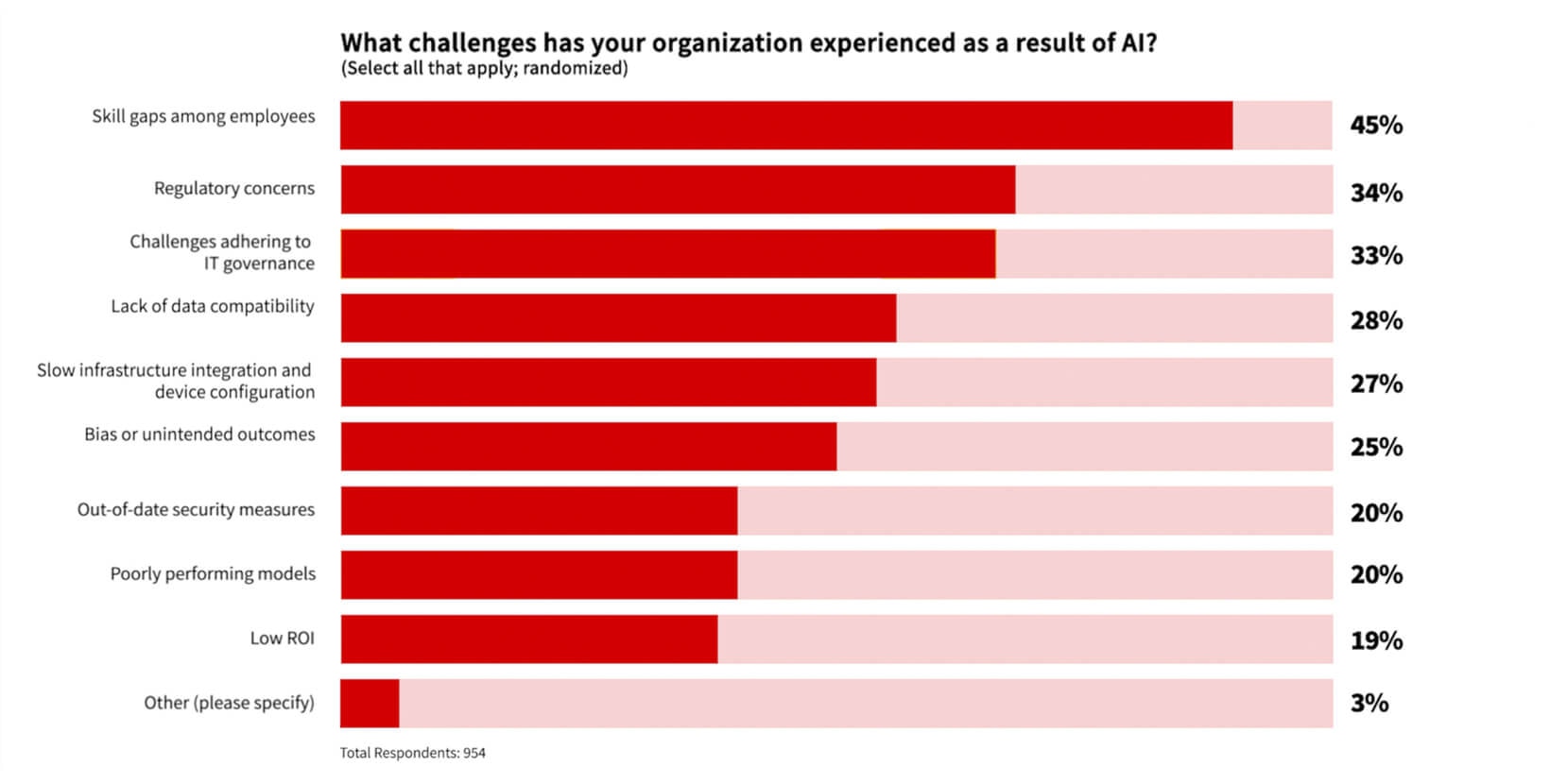
Implementing AI can also create challenges for organizations, our research revealed, including skill gaps among employees (45%), regulatory concerns (34%) and challenges adhering to IT governance (33%).
CDW has the artificial intelligence know-how to help you drive measurable business results.
The Relationship Between Friction and Resilience
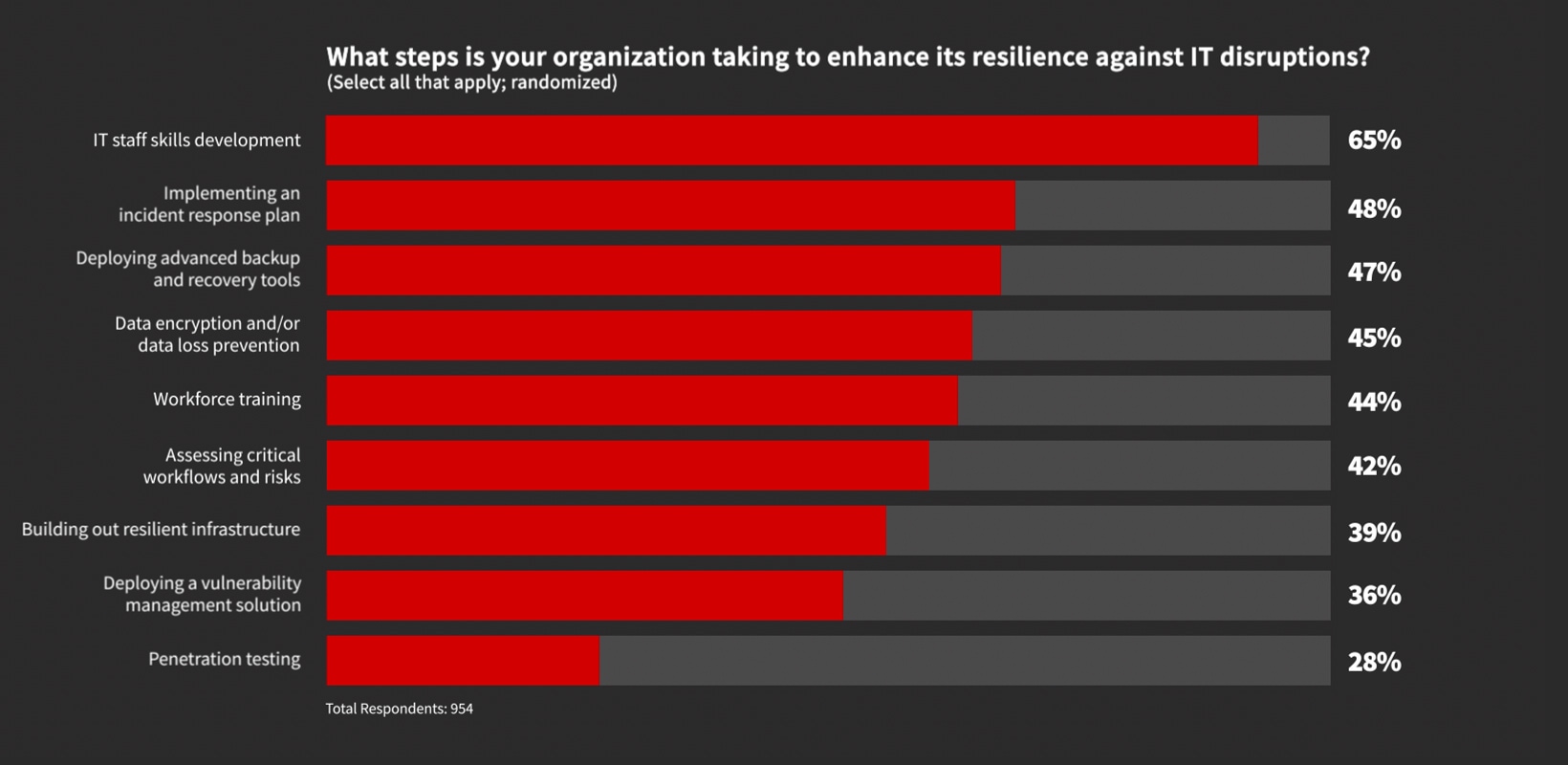
Our research revealed a connection between friction and resilience. When asked what steps their organization was taking to enhance its resilience against IT disruptions, 65% of respondents cited IT staff skills development, while 48% said implementing an incident response plan and 47% said deploying advanced backup and recovery tools.
Training is important to develop the skills needed to build resilience, but IT leaders must keep in mind that resilience is a team sport, notes Gary McIntyre, managing director of cyber defense at CDW. As they make progress toward improving their resilience, organizations should make sure that their skilled employees can work together as a team. “We want to make sure that an individual has training certifications and the ability to work with individual technologies, but a lot of what I’m looking for on the resilience side is, does the team operate well under pressure?” McIntyre says. “What we’re trying to do is to broaden our base of coherence by making sure the team knows that they can work well together.”
The Impact of Friction on Resilience
When asked where their efforts at building resilience caused friction, 62% said they resulted in performance impacts such as slower systems or apps. Another 55% said their resilience efforts created friction in the time and effort required for cybersecurity training, and 49% cited financial or resource constraints.
To reduce friction while maintaining cyber resilience, 56% said they are implementing automated solutions such as security orchestration, automation and response (SOAR) tools, while 53% said they regularly review and rationalize security tools and 49% said they provide tailored training for users and IT staff.
Organizations plan to use AI to reduce friction related to cyber resilience in a variety of ways, including real-time response and mitigation, such as blocking malicious traffic and deploying patches (57%) and automating repetitive tasks such as log analysis (54%).
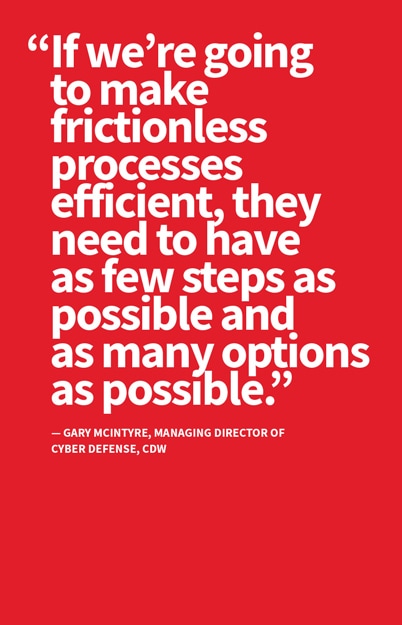
As they pursue efforts to improve workflow, IT leaders should pay attention to simplicity, McIntyre advises. “If we’re going to make frictionless processes efficient, they need to have as few steps as possible and as many options as possible,” he says.
Taming Friction in the Workplace
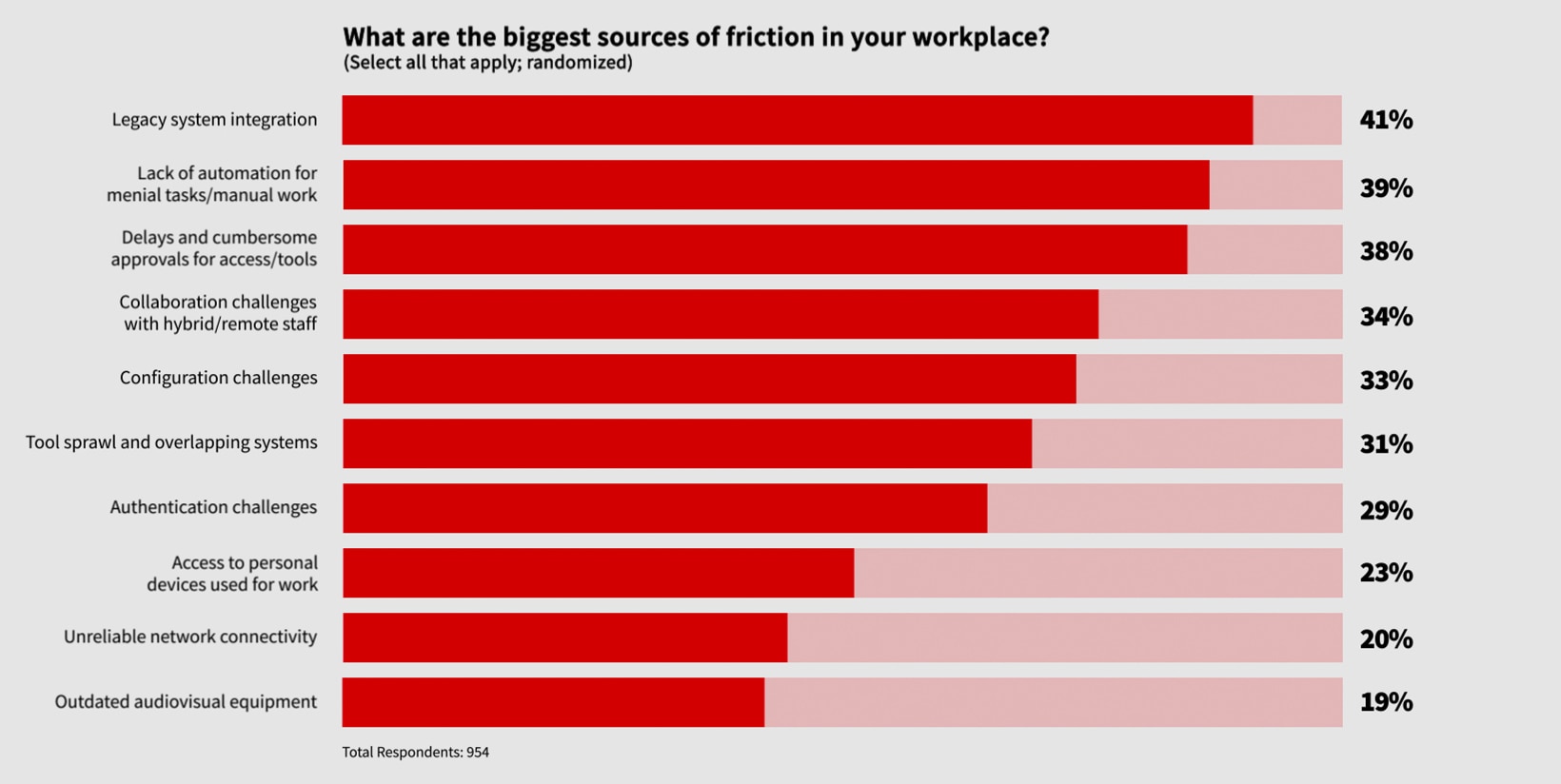
The workplace is where employees experience friction. The biggest source of workplace friction identified by our respondents was legacy system integration, which was cited by 41% of ITDMs, followed by lack of automation for menial tasks or manual work (39%) and delays and cumbersome approvals for access or tools (38%).
Friction can have a powerful impact on organizations’ customers as well. More than half (55%) of ITDMs said friction creates complexity, leading to customer frustration. Respondents also said friction slows down customer processes, leading to longer wait times (51%), and confuses customers, leading to reputational damage (37%).
“The fault here is with organizations that haven’t prioritized friction reduction as an outcome and invested in the tools and systems their IT team needs to execute, such as self-service resolution and AI agents for repetitive tasks,” Waddell says.

The Key To Reducing Digital Friction in the Workplace: Automation
Automation is a top priority as organizations look to reduce workplace friction, as 50% of respondents cited it as one their investments, followed closely by employee training or upskilling (49%) and improved collaboration technologies (44%).
When we asked about respondents’ workplace modernization strategies, the most frequently cited answers involved AI and automation (44%). Other respondents cited legacy upgrades (13%) and cloud or digital transformation (11%). “Process automation is being adopted to eliminate repetitive tasks and allow staff to focus on innovation,” one respondent stated.
CDW can help you develop the resilience to adapt to and recover from threats.


Platform Engineering: Reducing Friction in Development
Software development represents a potential source of friction for organizations in multiple ways. One-quarter (25%) of ITDMs said systems integration was the greatest source of friction for their developers, while 23% cited security and compliance restrictions.
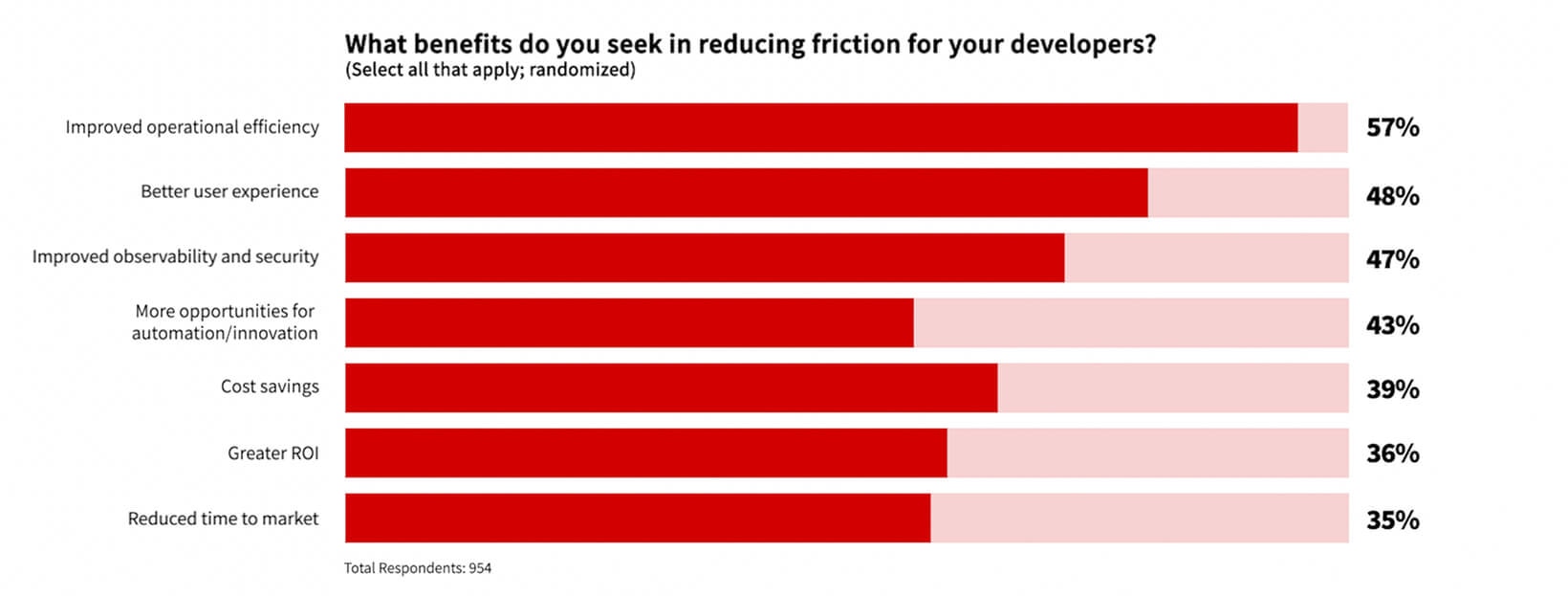
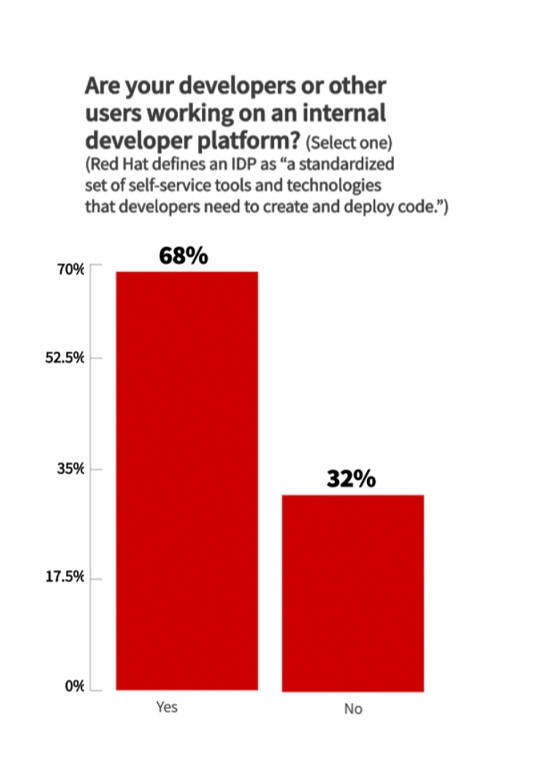
Organizations are largely adopting platform engineering practices such as using an internal developer platform, with 68% of respondents saying their organization uses an IDP, but many experience friction in their engineering processes. When they try to reduce friction for developers, respondents said the benefits they hope to achieve are improved operational efficiency (57%), better user experience (48%), and improved observability and security (47%).
“In platform engineering, we want to make as much of software development processes automated and autonomous as possible,” Chenevey says. “It’s really about executing that strategy. AI coding assistants represent a sea change on how we do this. You want to take out inefficiencies, automate as much as possible and include humans in places where humans are necessary for governance. Using AI for augmentation as opposed to replacement benefits developers and the business alike.”
Automation Reduces Bottlenecks and Aids Platform Engineering Success
When we asked where respondents experience bottlenecks in their software and app development, the most common area was in testing and quality assurance, which was cited by 22%. Another 18% cited integration, deployment and implementation.
“Bottlenecks occur when development tools are not properly integrated or quality assurance processes are extended,” one respondent stated.
“Manual testing processes increase release times and reduce productivity,” said another.
As with other areas of friction, automation offers significant potential to deliver improvements. To assist with their development initiatives, organizations are leveraging automation most widely in security (47%), testing (45%) and monitoring (43%).
However, deployment of these tools must be done strategically, with IT leaders keeping a variety of objectives in mind as they implement new tools and capabilities, including AI coding assistants. “When we meet with CDW customers, we talk about business goals, security, observability and organizational change management,” Chenevey says. “We’ll fail in our platform engineering initiatives if we don’t cohesively address all of these areas.”
Ultimately, friction represents a major challenge for IT teams and organizational leaders across industries. Those who are able to reduce friction in their environments will give themselves advantages over their competitors in numerous areas. To achieve this requires a holistic effort that involves people, technology and processes.
“My advice is for IT leaders to view friction reduction as an outcome you’re building toward, the same way you would cost savings or risk mitigation,” Waddell says. “When we deploy this new tool or process, the explicit goal is to remove friction for our end user. As you build, ask yourself over and over: Does this remove friction? Does this allow us to go faster? Is this a better experience? This idea has to be part of your culture to the point where it becomes second nature.”
CDW experts have the platform engineering skills to help you simplify software development.
Eliminating Digital Friction: How To Build a Frictionless Enterprise
CDW research shows how top organizations are using new approaches to AI, security and infrastructure to increase productivity, create happier customers, and unlock growth and innovation.
A famous scene in the 1999 movie Office Space features three workers taking a baseball bat to the office printer. Instead of working as expected, the printer refused to fulfill its purpose and instead offered only a cryptic error message: “PC Load Letter.” It shows the trio taking out their frustrations on the device with their feet and even their fists, as well as the bat.
The scene presents a clear picture of the frustration employees feel when they experience friction in the workplace. While technology has improved significantly in the decades since Office Space debuted, new research from CDW shows that workplace friction remains a significant issue that reduces productivity, increases costs and frustrates workers.
In a survey of 954 IT decision-makers (ITDMs) from across industries, CDW found that implementation of new IT tools represents a common source of friction, with 54% of respondents saying it feels slower or more difficult than it should. Further, 43% of respondents cited IT operations as a source of friction, while 42% cited access controls.
IN YOUR ORGANIZATION, WHICH OF THESE AREAS FEEL SLOWER OR MORE DIFFICULT THAN THEY SHOULD?
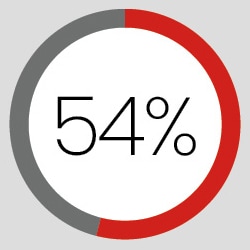
Implementation of new IT tools
The Intention To Reduce Friction and Its Impact
Technology-based friction has existed in the workplace for decades, despite massive advances in technology. In fact, while technology has delivered powerful new capabilities, it won’t improve workflow unless organizational leaders make that a specific goal, says Conor Waddell, senior vice president for integrated technology solutions and product and partner management with CDW.
“The natural law of order bends toward complexity and friction. In any process, we tend to do things that slow us down, even with the best of intentions,” Waddell says. “There is simply no way to remove that friction without being intentional about it. It’s not going to remove itself. It has to be a leader-led effort to design and build friction out of the system.”
Improving workflows is a high priority for organizations across industries, as friction leads to a number of negative outcomes. When we asked respondents about the greatest impact of friction on their organizations, 34% said increased security risks, while 33% said it slows innovation or prevents quick decision-making.
Further, when we asked about the impact of friction created by efforts to improve cyber resilience, 56% said it reduced productivity, while 53% said it increased operational costs and 52% said it led to inefficient workflows.
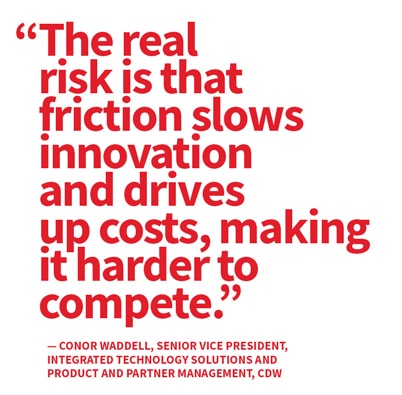
“The real risk is that friction slows innovation and drives up costs, making it harder to compete,” Waddell says.
CDW can help your organization scale artificial intelligence across the enterprise to improve how work gets done.
Workplace Evolution Brings New Tech Tools To Reduce Friction
Over time, workplace friction has evolved along with technology. For example, printers don’t represent the source of frustration now that they did a few decades ago. But users’ demands on the workplace have changed as well.
“We’re seeing processes that used to be normal changed in ways we couldn’t have even imagined a decade ago. We’re doing things in seconds that used to take days or weeks,” Waddell says. “Our expectations have changed, and the expectations of our employees and customers have changed, and so, we’re all feeling that friction way more than we have in the past.”
The Power of AI and Automation To Reduce Digital Friction
The CDW research indicates that IT decision-makers view artificial intelligence and automation as powerful tools to improve workflow. Half of respondents (50%) said their organization has made investments in AI integration and automation for low-level tasks to reduce friction in the workplace.
However, as organizations make these investments, they need to do so strategically. “There is a fundamental shift underway with AI. For the past few years, we’ve been using AI as an add-on to human-centered processes. But in many places, this relationship is slowly inverting, with AI handling the process while humans are freed up for human-to-human connection,” Waddell says. “In practice, this means doctors spending more time with patients while AI takes the notes, lawyers advising clients while AI reviews contracts and HR partners spending more time with employees while AI answers common questions.
When AI is used like this, it directly reduces friction on the end user,” Waddell adds. “But if AI is implemented poorly or not aligned with business needs, it can actually create new confusion and risks that you have to chase.”
The Human Role in Digital Friction
Organizations can’t solve friction solely with new tools; culture, alignment and adoption are equally powerful friction points. When asked to define friction, 51% of respondents described it as process inefficiencies and workflow obstacles, by far the most common response. About 15% said friction manifested in communication and collaboration breakdowns. One respondent stated: “Friction occurs when there is a lack of communication and synchronization between business units. Undefined expectations cause friction at every turn.”
Humans are involved in workplace issues in multiple ways. When we asked ITDMs about the greatest sources of friction for their developers, lack of skills or staffing gaps (14%) and resistance to change (10%) were among the leading responses.
“The bottom line: Humans are at the center here,” Waddell says. “But the solution isn’t to blame individuals, it’s to empower them with better tools, clear expectations from leadership and a culture that prioritizes the work of designing this out of the system.”
Taking Measure: The Importance of Digital Friction Metrics
While its impacts are real, the term “friction” is a fairly abstract concept. However, it’s important for organizations to have a way to measure the friction their employees experience. More than a third of respondents (37%) said they measure friction by help desk tickets and support volume. “The number of help desk tickets is a primary factor since client problems and complaints need priority responses,” one ITDM said.
“If you can’t measure it, you can’t fix it,” Waddell says. “At CDW, we guide customers to use practical metrics — like help desk ticket volume, resolution times and user feedback — to track friction. We also encourage regular reviews of workflows and technology, so organizations can proactively address issues before they become bigger problems.”
The Role of AI in Addressing Friction
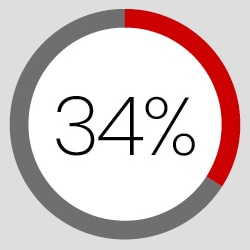
Our research made clear that AI can play a pivotal role in helping organizations improve the flow of work. About two-thirds of ITDMs (67%) said their organization is spending significantly on generative AI. But most organizations appear to be early in their journey with AI: 34% said they were in early adoption, and 31% said they had achieved moderate success. Another 20% said they are planning to use AI, while only 11% said they had achieved a mature or successful adoption of AI.
The rapid shift to AI in the first wave of enterprise adoption was undertaken by the lines of business, not IT. That initial wave caught some IT organizations less prepared than they would’ve preferred, says Joe Chenevey, a solutions strategy lead in advanced computing at CDW. “What we’re now seeing is another wave of opportunity approaching. We’re advising customers to go beyond only addressing line-of-business and front-office use cases,” he adds. “By applying generative and agentic AI to IT use cases, we envision our customers reaching greater levels of productivity and satisfaction than they do through current IT operational tools and processes, which haven’t removed friction from the system for everyone.”
WHAT LEVEL OF MATURITY HAS YOUR ORGANIZATION ACHIEVED IN USING AI TO REDUCE FRICTION?
Early adoption
Reducing Friction Through Automation
When we asked respondents about the most important benefits of using AI to reduce friction within their organization, 53% cited automation and efficiency. This is reflected in real-world implementations of AI, but IT leaders should keep their strategic goals — including the reduction of friction — in mind as they consider these initiatives.
“A significant portion of the ROI from AI today is in the friction reduction category. Chatbots that answer employee questions, AI built into your contact center to route and respond to calls, predictive AI that creates real-time intelligence — that’s all cutting out friction,” Waddell says. “But you have to be thoughtful and intentional about this. Approach friction reduction as the goal and build for that end.”
As organizations look to deploy AI, they need IT infrastructure that can support the technology. When asked about the infrastructure options their organization is considering for AI implementations, 59% said public cloud, while 50% said hybrid cloud.
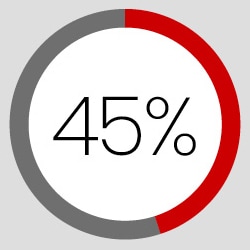
Implementing AI can also create challenges for organizations, our research revealed, including skill gaps among employees (45%), regulatory concerns (34%) and challenges adhering to IT governance (33%).
WHAT CHALLENGES HAS YOUR ORGANIZATION EXPERIENCED AS A RESULT OF AI?
Skill gaps among employees
CDW has the artificial intelligence know-how to help you drive measurable business results.
The Relationship Between Friction and Resilience
Our research revealed a connection between friction and resilience. When asked what steps their organization was taking to enhance its resilience against IT disruptions, 65% of respondents cited IT staff skills development, while 48% said implementing an incident response plan and 47% said deploying advanced backup and recovery tools.
WHAT STEPS IS YOUR ORGANIZATION TAKING TO ENHANCE ITS RESILIENCE AGAINST IT DISRUPTIONS?
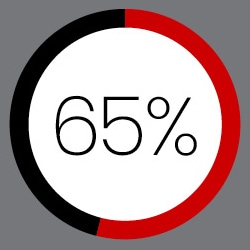
Skill gaps among employees
Training is important to develop the skills needed to build resilience, but IT leaders must keep in mind that resilience is a team sport, notes Gary McIntyre, managing director of cyber defense at CDW. As they make progress toward improving their resilience, organizations should make sure that their skilled employees can work together as a team. “We want to make sure that an individual has training certifications and the ability to work with individual technologies, but a lot of what I’m looking for on the resilience side is, does the team operate well under pressure?” McIntyre says. “What we’re trying to do is to broaden our base of coherence by making sure the team knows that they can work well together.”
The Impact of Friction on Resilience
When asked where their efforts at building resilience caused friction, 62% said they resulted in performance impacts such as slower systems or apps. Another 55% said their resilience efforts created friction in the time and effort required for cybersecurity training, and 49% cited financial or resource constraints.
To reduce friction while maintaining cyber resilience, 56% said they are implementing automated solutions such as security orchestration, automation and response (SOAR) tools, while 53% said they regularly review and rationalize security tools and 49% said they provide tailored training for users and IT staff.
Organizations plan to use AI to reduce friction related to cyber resilience in a variety of ways, including real-time response and mitigation, such as blocking malicious traffic and deploying patches (57%) and automating repetitive tasks such as log analysis (54%).
As they pursue efforts to improve workflow, IT leaders should pay attention to simplicity, McIntyre advises. “If we’re going to make frictionless processes efficient, they need to have as few steps as possible and as many options as possible,” he says.
Taming Friction in the Workplace
The workplace is where employees experience friction. The biggest source of workplace friction identified by our respondents was legacy system integration, which was cited by 41% of ITDMs, followed by lack of automation for menial tasks or manual work (39%) and delays and cumbersome approvals for access or tools (38%).
Friction can have a powerful impact on organizations’ customers as well. More than half (55%) of ITDMs said friction creates complexity, leading to customer frustration. Respondents also said friction slows down customer processes, leading to longer wait times (51%), and confuses customers, leading to reputational damage (37%).
“The fault here is with organizations that haven’t prioritized friction reduction as an outcome and invested in the tools and systems their IT team needs to execute, such as self-service resolution and AI agents for repetitive tasks,” Waddell says.
WHAT ARE THE BIGGEST SOURCES OF FRICTION IN YOUR WORKPLACE?
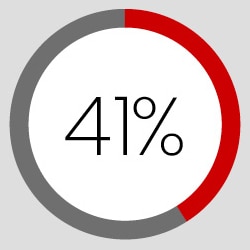
Legacy system integration
The Key To Reducing Digital Friction in the Workplace: Automation
Automation is a top priority as organizations look to reduce workplace friction, as 50% of respondents cited it as one their investments, followed closely by employee training or upskilling (49%) and improved collaboration technologies (44%).
When we asked about respondents’ workplace modernization strategies, the most frequently cited answers involved AI and automation (44%). Other respondents cited legacy upgrades (13%) and cloud or digital transformation (11%). “Process automation is being adopted to eliminate repetitive tasks and allow staff to focus on innovation,” one respondent stated.
CDW can help you develop the resilience to adapt to and recover from threats.
Platform Engineering: Reducing Friction in Development
Software development represents a potential source of friction for organizations in multiple ways. One-quarter (25%) of ITDMs said systems integration was the greatest source of friction for their developers, while 23% cited security and compliance restrictions.
Organizations are largely adopting platform engineering practices such as using an internal developer platform, with 68% of respondents saying their organization uses an IDP, but many experience friction in their engineering processes. When they try to reduce friction for developers, respondents said the benefits they hope to achieve are improved operational efficiency (57%), better user experience (48%), and improved observability and security (47%).
“In platform engineering, we want to make as much of software development processes automated and autonomous as possible,” Chenevey says. “It’s really about executing that strategy. AI coding assistants represent a sea change on how we do this. You want to take out inefficiencies, automate as much as possible and include humans in places where humans are necessary for governance. Using AI for augmentation as opposed to replacement benefits developers and the business alike.”
WHAT BENEFITS DO YOU SEEK IN REDUCING FRICTION FOR YOUR DEVELOPERS?
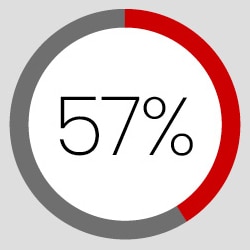
Improved operational efficiency
Automation Reduces Bottlenecks and Aids Platform Engineering Success
When we asked where respondents experience bottlenecks in their software and app development, the most common area was in testing and quality assurance, which was cited by 22%. Another 18% cited integration, deployment and implementation.
“Bottlenecks occur when development tools are not properly integrated or quality assurance processes are extended,” one respondent stated.
“Manual testing processes increase release times and reduce productivity,” said another.
As with other areas of friction, automation offers significant potential to deliver improvements. To assist with their development initiatives, organizations are leveraging automation most widely in security (47%), testing (45%) and monitoring (43%).
However, deployment of these tools must be done strategically, with IT leaders keeping a variety of objectives in mind as they implement new tools and capabilities, including AI coding assistants. “When we meet with CDW customers, we talk about business goals, security, observability and organizational change management,” Chenevey says. “We’ll fail in our platform engineering initiatives if we don’t cohesively address all of these areas.”
Ultimately, friction represents a major challenge for IT teams and organizational leaders across industries. Those who are able to reduce friction in their environments will give themselves advantages over their competitors in numerous areas. To achieve this requires a holistic effort that involves people, technology and processes.
“My advice is for IT leaders to view friction reduction as an outcome you’re building toward, the same way you would cost savings or risk mitigation,” Waddell says. “When we deploy this new tool or process, the explicit goal is to remove friction for our end user. As you build, ask yourself over and over: Does this remove friction? Does this allow us to go faster? Is this a better experience? This idea has to be part of your culture to the point where it becomes second nature.”